
CGI & High Watchmaking: The Art of Micromechanics and Light
Capturing the soul of the caliber, from black polishing to sapphire reflections
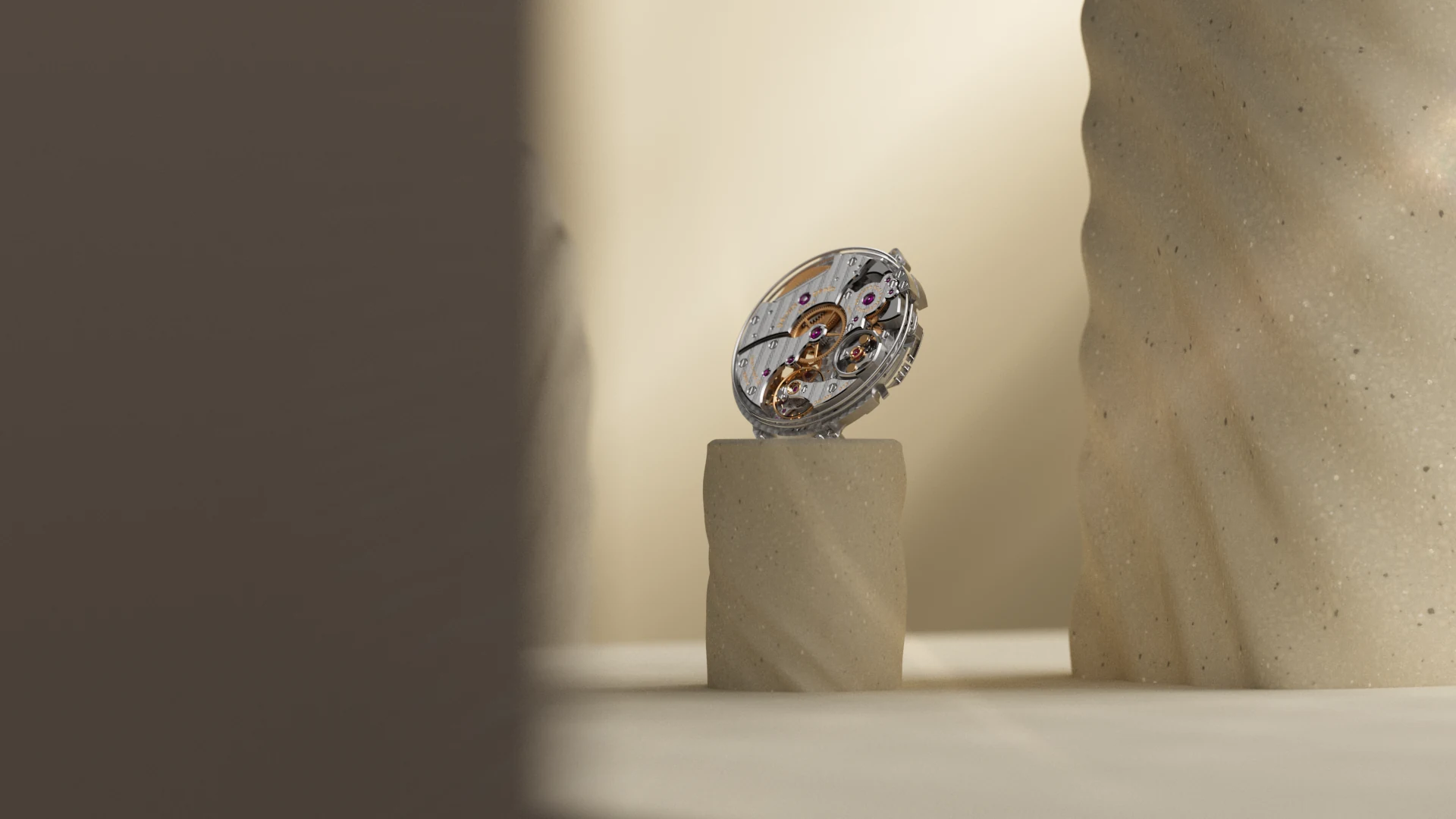
Inside our CGI pipeline dedicated to watchmaking manufactures: micron-level CAD re-topology, anisotropic shaders for artisanal finishes (black polish, Côtes de Genève, microblasted titanium), and macroscopic lighting dramaturgy.
I. From Engineering CAD to Digital Sculpture
When a watchmaking manufacture entrusts us with the STEP or IGES files of a timepiece — whether a flying tourbillon, a titanium skeleton chronograph, or a minute repeater — the industrial geometry is engineered for CNC milling, not for light. At the macroscopic scale of a 4K film or high-definition print, a mathematically sharp 90° edge catches no specular highlight: it looks artificial and cold.
The first step in our Digital Atelier is performing targeted digital anglage (beveling). Every bridge, gear wheel, and case lug visible on camera is reworked in Maya, 3ds Max, Houdini, and ZBrush to introduce the micro-bevels, assembly tolerances, and subtle curves that a master watchmaker shapes at the bench.
“In high watchmaking, the credibility of a CGI image does not hinge on the overall shape of the case, but on the tenth of a millimeter of a polished bevel where a thread of light glides.”
II. Grammar of Finishes: Anisotropy Maps, Microblasting & Black Polish
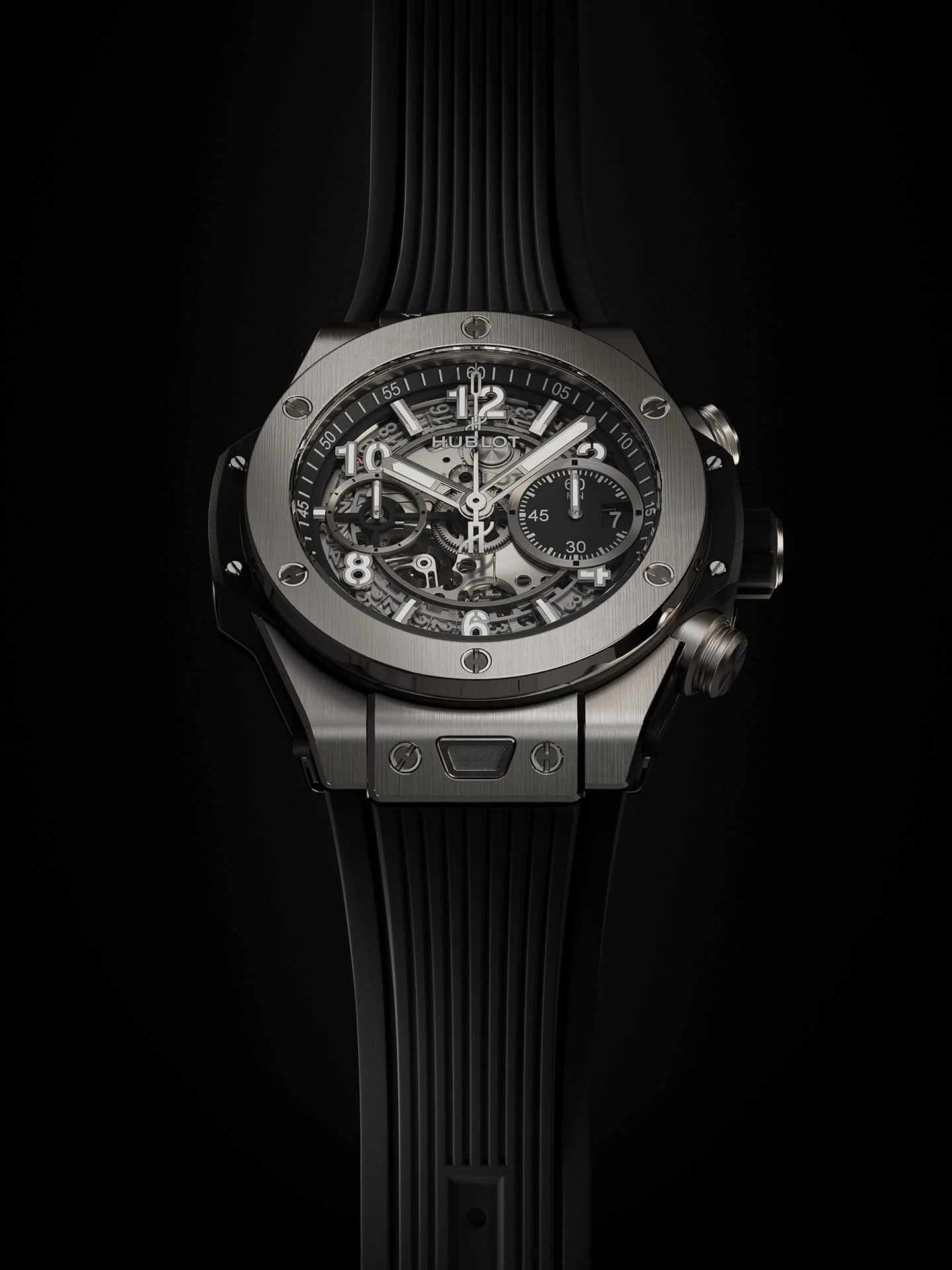
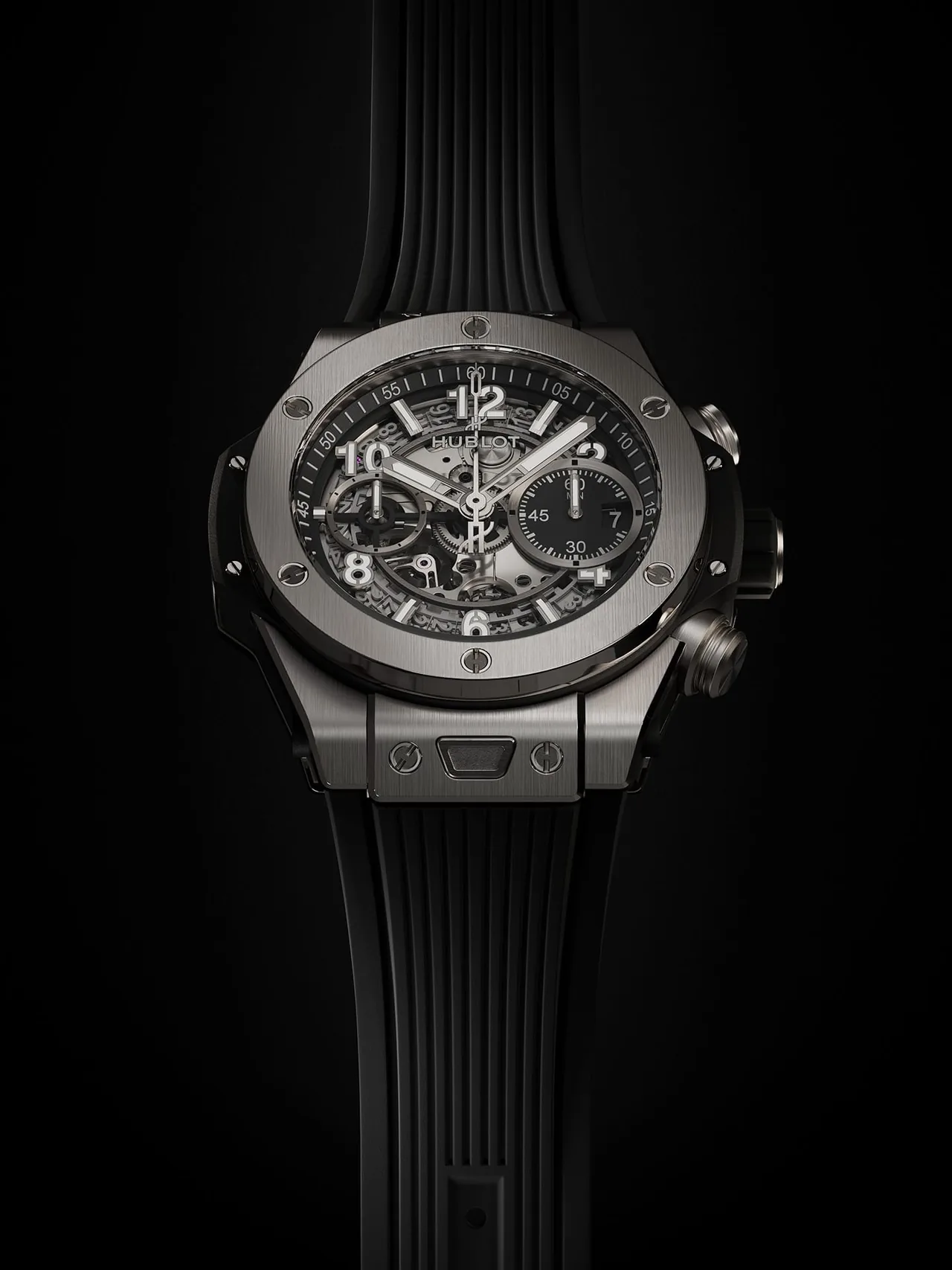
The readability of a watch caliber — especially on a tone-on-tone skeleton movement like Hublot's Big Bang Unico Titanium — depends on the crisp contrast between its surface states:
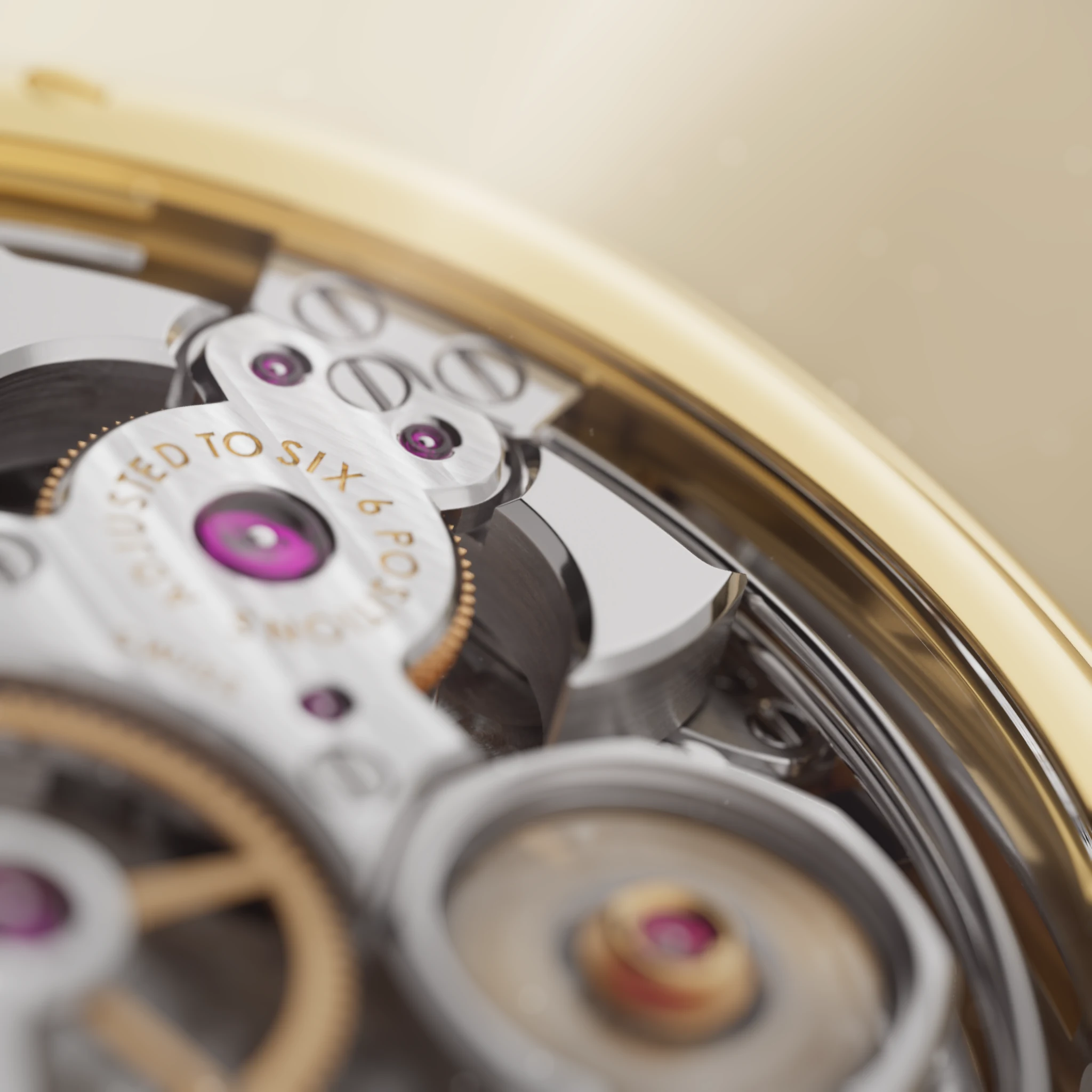
- Black polish (poli bloqué): a mirror-like specular surface that flips from brilliant white to deep black depending on the camera angle.
- Straight satin and circular brushing: crafted via high-resolution 32-bit float anisotropy maps that stretch reflections along the microscopic grooves of the metal.
- Microblasting and fine sandblasting: shaders reproducing the matte granulation of modern mainplates, separating each mechanical layer naturally without cheating with colored lights.
- Côtes de Genève and perlage: procedural generation of circular abrasion ridges with optical phase shift from one stripe to the next.
III. Mechanical Rigging, Sapphire Crystal Optics & Render Engines
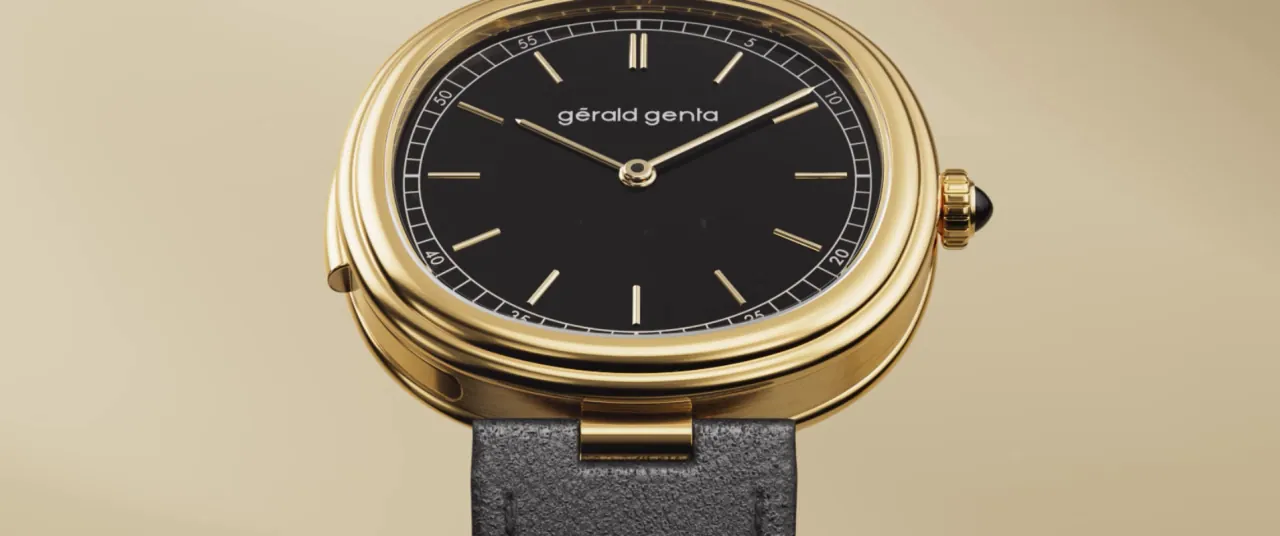
Depending on the nature of the watchmaking project, we tailor our pipeline between Maya / Redshift Render (for large-scale universe films such as Audemars Piguet Royal Oak Concept Black Panther or smartwatches with rebuilt UI like Hublot Big Bang e Gen 3) and 3ds Max / V-Ray (under the direction and mechanical rigging of Ladislas Lepoutre for Gérald Genta's GG-002 Minute Repeater caliber).
In both Redshift and V-Ray, we independently calibrate the refractive index of sapphire crystal (n = 1.77), its double-sided anti-reflective coating, and the refraction of pivot rubies, before assembling all passes in Nuke compositing.
- Alexandre Ferré — Creative Direction & VFX Supervision
- Ladislas — High Watchmaking Direction & 3ds Max Rigging
- Pierre — Lead 3D Artist (CAD & Watchmaking Lookdev)
Exploration Plates & Material Studies

Case Studies Associated with This Research

Frequently Asked Questions on This Expertise
01 // Why must engineering CAD files be reworked before 3D watchmaking rendering?
Why must engineering CAD files be reworked before 3D watchmaking rendering?
Native CAD files (STEP, IGES) designed for CNC machining have mathematically sharp 90° edges with no micro-bevels or assembly tolerances. At the macroscopic scale of a 4K film, those edges catch no specular highlight and look artificial. Our digital anglage in Maya, 3ds Max, Houdini, and ZBrush recreates the micro-chamfers and subtle curves shaped by a master watchmaker.
02 // How does Alt-Studio reproduce authentic watchmaking finishes (black polish, titanium, sapphire)?
How does Alt-Studio reproduce authentic watchmaking finishes (black polish, titanium, sapphire)?
We use high-definition 32-bit float anisotropy maps to orient microscopic metal grooves (circular brushing, Côtes de Genève) and physical shaders in Redshift and V-Ray calibrated to the exact refractive index of sapphire crystal (n = 1.77) with double-sided anti-reflective coating, separating mirror-polished bevels from microblasted mainplates.
03 // What are the typical timelines and deliverables for a high watchmaking CGI film?
What are the typical timelines and deliverables for a high watchmaking CGI film?
A complete production typically ranges from 2 weeks (high-definition print pitch sprint) to 4–8 weeks for a full watchmaking film depending on complexity (brand universe crossover, grand complication mechanical rigging, smartwatch UI recreation). Deliverables include 4K masters and multi-format social cutdowns.
Luxury & Watchmaking Expertise // Digital Atelier
Deploy this expertise on your next Luxury & Watchmaking production.
Review our dedicated deliverables, cadences, and methodologies on our pillar page or scope your project directly (timelines, formats & estimate) with Alexandre Ferré.